

April 1, 2019
The RFID antenna Reader is used to activate tags and transmit information to the Reader. It is one of the essential components of RFID identification, but finding the right antenna Reader for your specific needs can be very challenging. Here are some key factors to consider when designing a high-performance RFID system.
Assess the need for an internal or external “ Reader ” branch
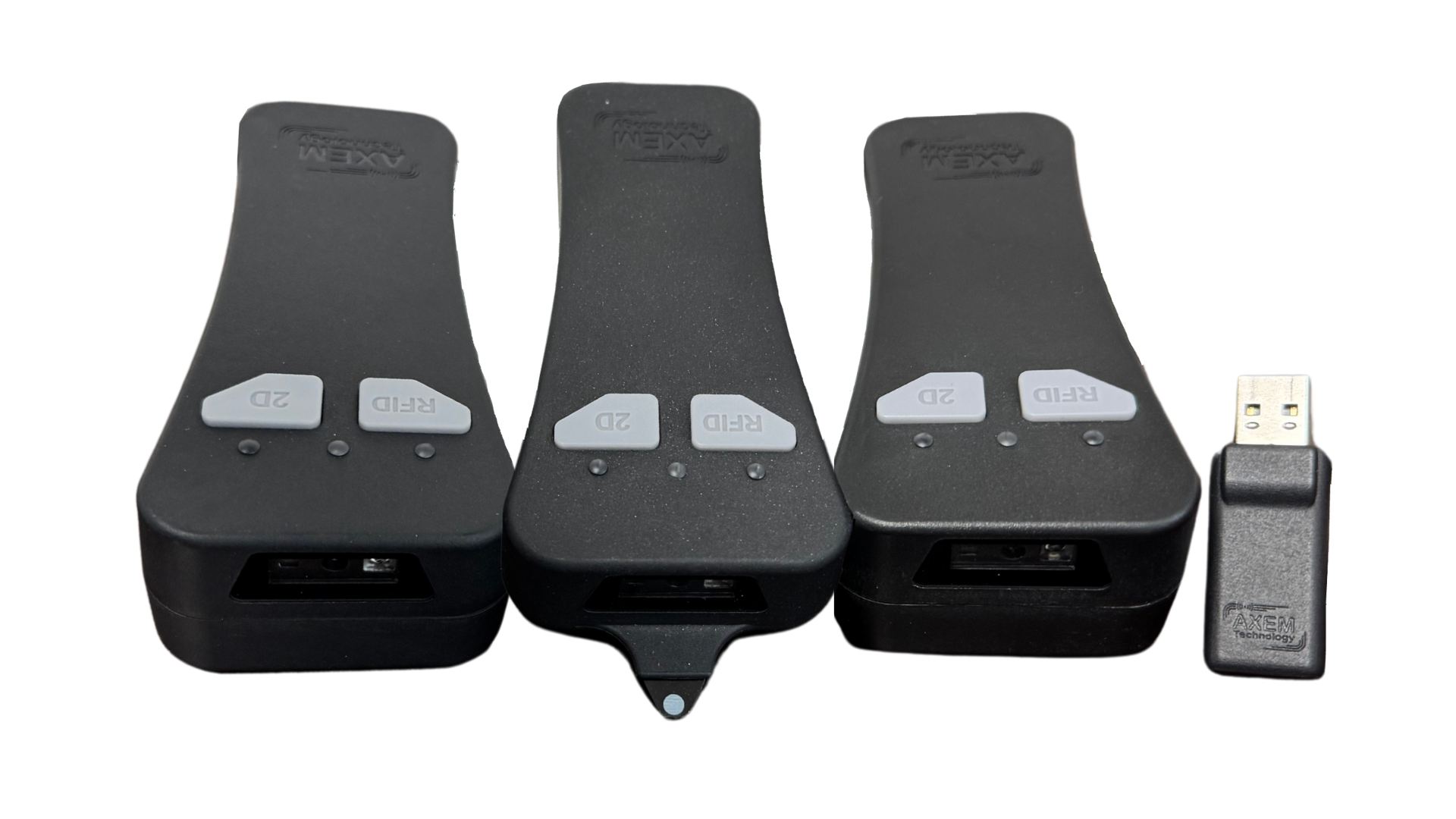
The internal Reader antenna is integrated into a mobile RFID- Reader , such as the MBA5-P23. The user can then move around with the device and, by manually activating it, read all tags located within a defined perimeter. The second option, the external Reader antenna—such as the C9-2626 —must be mounted on a surface and connected to an RFID Reader , such asthe AX’Smart Reader 4. External RFID readers antennas come in a variety of shapes and sizes to perfectly suit your needs. These external RFID readers antennas can offer higher gain and are therefore useful for achieving a longer range.
Set the polarization of the RFID " Reader " antenna
The polarization of an RFID Reader antenna is defined by its electric field. There are two types of polarization: linear and circular. It is important that the antenna and the tags it communicates with have the same polarization to avoid power loss.
We speak of linear polarization (vertical or horizontal) when the electric field is straight during propagation.

On the contrary, we speak of circular polarization if the electric field traces a circle as it propagates. Circular polarization is recommended if the tags are oriented randomly.

Selecting the Frequency for the RFID " Reader " Antenna
RFID operates on three frequencies: low frequency (LF), high frequency (HF), and ultra-high frequency (UHF). Radio frequencies vary by country and region around the world.
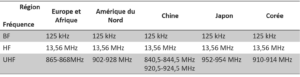
For the RFID system to work, all of the equipment (antenna, RFID re Reader , and RFID tags) must be set to the same frequency.
Determine the antenna's performance
The better the antenna's performance (gain, efficiency, etc.), the greater its reading range.
A broadband antenna is required when used on a large scale (Europe, the U.S., etc.).
Here are two examples of RFID " readers " antennas with different gains:
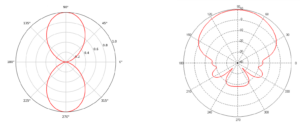
readers RFID antennas offer a wide range of features. They are not designed for specific applications. It is therefore necessary to carefully assess all constraints and requirements in order to find the Reader RFID antenna that will best meet your needs.